We care about protecting the environment, which is why we offer simple, free options for disposing of your waste electrical equipment and batteries.
Consumers play a key role in the system for handling electrical appliances and portable batteries, because they decide what happens to an old appliance or battery. Old and unwanted electrical equipment and batteries do not belong in mixed municipal waste. Instead, they should be handed over at collection points, known as take-back points, from which they go on to be reused or recycled.
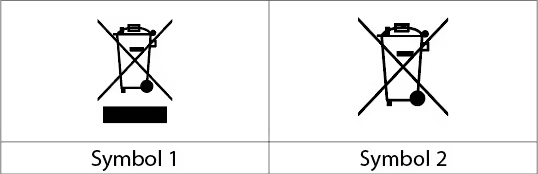
The symbols below inform consumers that the electrical equipment or battery does not belong in municipal waste. All new electrical equipment and batteries are marked this way. The symbol may appear directly on the product, on its packaging, in the user manual or on the warranty card.
Not only electrical equipment but also batteries contain many recyclable metals, such as zinc, iron, manganese, nickel, cadmium and lead. Some of these substances are also very dangerous to the environment and human health, especially mercury, lead and cadmium. Certain batteries are often marked with the symbol of the chemical element they contain (Pb, Cd, Hg).
By handing over batteries and electrical equipment at a take-back point, we conserve primary raw materials, mainly through material recycling, and at the same time protect our environment from improper handling.
Unused batteries that are not handed over for recycling at take-back points, but are instead stored in office drawers or elsewhere in homes or businesses, can even cause a fire. This applies in particular to lithium batteries. For safety reasons, it is therefore very important to hand in used batteries for recycling as soon as possible.
Servodata a.s., Karolinská 661/4, Karlín, 186 00 Prague 8, Czech Republic | Company ID: 25112775 | Member of Moore Czech Republic